
Seven people are registered and waiting for help.
Seven people are registered and waiting. The fund currently stands at zero.
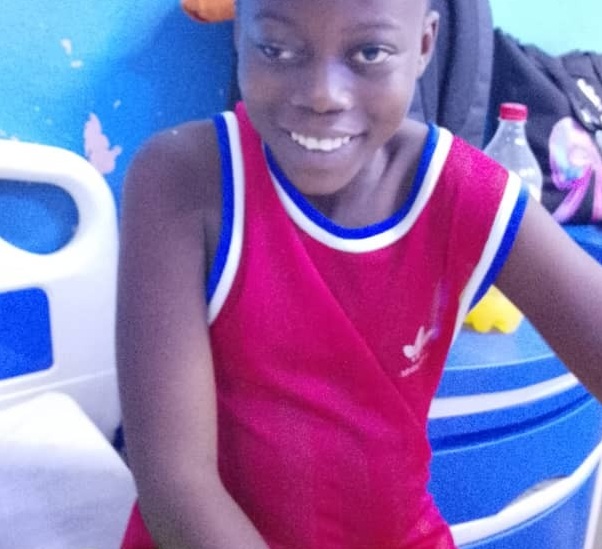
The Patcha Foundation keeps a page listing the people currently registered for treatment support. Each entry has a first name, an age, and a diagnosis.
- Julienne, 70 — pancreatic cancer
- Immaculate, 44 — breast cancer
- Guy, 51 — bone cancer
- Roland, 61 — colon cancer
- Constance, 41 — breast cancer
- Hope, 14 — brain cancer
- Yolande, 38 — breast cancer
Those seven are who the current fund is for. The goal is $7,000, and as of this writing nothing has been raised toward it. The foundation's own line on that page is that no one should have to choose between food and chemotherapy, which in the places they work describes a decision families are actually making rather than a way of dramatizing one.
Who they are
The Patcha Foundation is a not-for-profit based in Maryland that works in limited-resource settings across Africa, with its African base in Douala, Cameroon. It runs on grants and public support. Its work covers:
They also run a companion care program and a palliative care program, which is a large part of why I pay attention to their work. Treatment is only ever part of what a person needs, and the hours around it have to be covered by somebody.
Their annual reports going back to 2017 are posted publicly on the site, along with impact videos for most of the recent years. For a foundation this size that is a meaningful amount of transparency, and if you would rather evaluate them yourself than take my word for any of this, the material is there to read.
What that work looks like on the ground
Their most recent mission ran for three days in June 2026 in Santa, a farming community in the Northwest Region of Cameroon about twelve miles outside Bamenda. It was the eleventh mission the Foundation has run. Across all eleven, in seven regions of Cameroon, more than 34,400 people have received care.
Three days in Santa, Cameroon
June 10–12, 2026 — the Foundation's eleventh medical mission
Across eleven missions in seven regions of Cameroon, more than 34,400 people have received care.
Figures from the Patcha Foundation's published 2026 CASEC Medical Mission Impact Report.
Of the 88 surgeries, 85 were done on site and three complex cases were transported to a better-equipped hospital in Yaoundé. The 725 cancer screenings break down as 259 women screened for breast and cervical cancer, 100 men for prostate, 31 for colon cancer — offered for the first time this year — and 335 children vaccinated against HPV. The laboratory ran 1,647 tests.
The screening numbers matter less than what the screening found. Fourteen precancerous cervical lesions were identified, twelve of them treated on the spot with thermal ablation, so the women did not have to be tracked down later for follow-up that often never happens. Eight breast masses were found on clinical exam, four of them cancer, all four referred for oncologic care. Eight men had elevated PSA results. Three colon screenings came back positive. For a great many of the people in those numbers, it was the first cancer screening of their lives.
The mission also took vital signs on 2,223 people. Of those, 892 had blood pressure at hypertensive-crisis levels and 396 had severely elevated blood sugar — 1,288 people, well over half, carrying at least one reading that could become an emergency. Most had no idea.
What the money does
The Foundation publishes its mission budget, which is not something every organization does. Direct expenditure on Santa came to 38,874,469 FCFA, roughly $67,024. Medications, supplies and equipment accounted for $38,466 of it.
Divided across 2,831 people treated, that is about $24 per person seen. That figure is my arithmetic from their published totals rather than a number the Foundation itself quotes, and a per-patient average flattens real differences — a hernia repair and a blood pressure reading are not the same cost. But it gives you a rough sense of what a dollar buys in this setting.
The report is also candid about what did not go well, which is part of why I trust it. They did not meet their fundraising goal for the mission. Over 350 kilograms of donated medication coming from Dubai was cancelled days before the start, and unbudgeted money had to be spent buying replacements locally. Customs charged high clearance fees despite an exoneration from the Ministry of Finance, and the shipment did not clear until the day before the mission's final day, arriving on site at four in the morning. Some patients had to come back a second time to get their full prescriptions.
What was left behind: phototherapy equipment for treating newborn jaundice and a 22-litre autoclave sterilizer, both donated to Santa District Hospital and both now in use there. The hospital has two doctors and twenty-one nurses for a subdivision of about 64,000 people.
Why we are asking now
The obvious thing would be to build this into something more considered around Breast Cancer Awareness Month in October, and three of the seven people on that list do have breast cancer. But treatment schedules do not move to accommodate fundraising calendars. Chemotherapy appointments either happen or they are missed, medication is either paid for or it is not, and the youngest person registered is fourteen years old with a brain tumor. Waiting three weeks to make a tidier appeal did not seem like the right trade.
You can give to the fund as a whole, or select one patient from the list and give to them directly. Donations start at $50, and the page accepts any custom amount.
Support a patient in treatment
The Patcha Foundation · Donate to a Cancer Patient in Need of Treatment
Give to all current patients, or select one by name. Processed directly by the foundation.
Other ways to help
A good many people reading this are already stretched thin caring for someone at home, and a donation may not be what you have available this month. Sharing the link with one person who does have room to give is genuinely useful. So is following the foundation and passing along what they publish, since a fair amount of their education work depends on reach.
One thing you should know: the Patcha Foundation is my family's foundation. I am writing about work my own family has been doing for years, and asking you to help pay for it.
I have also given to it myself. The numbers above exist in a form anyone can check only because people kept working on that report long after the mission ended, and the two hundred–plus volunteers listed in its appendix — physicians, nursing students, translators, drivers, the Santa residents who turned out, the women who cooked every meal for three days — were paid nothing for any of it.
That connection is why I know any of these details, and it is also a good reason to read the reports yourself and form your own view rather than relying on mine.
Why this one
My family has been through cancer. Gilgal exists partly because of what a serious illness does to a household — the scheduling, the exhaustion, the way ordinary obligations keep arriving while someone is in treatment.
Families here deal with insurance fights, waiting lists and costs they cannot easily absorb, but there is usually somewhere to turn. In the places the foundation works there often is not, which is what the $7,000 is for.
If you are able to give, the page is here. If you would rather read more about the foundation first, that is at patchafoundation.org. Thank you for reading their names either way.
Gilgal Home Care & Registry
A Pennsylvania licensed home care agency and registry — connecting families with qualified caregivers, and equipping the next generation of care professionals.
care@gilgalhomecare.org
King of Prussia, PA 19406
Serving Montgomery, Chester, Delaware,
Bucks & Philadelphia counties
Home Care
Support & Training
© 2026 Gilgal Home Care & Registry. All rights reserved. King of Prussia, PA 19406.
Licensed by the Pennsylvania Department of Health under 28 Pa. Code Chapter 611 as both a home care agency and a home care registry. Family-Led Care is our name for the registry model: Gilgal refers independent contractors and does not employ, supervise, or set the compensation of the contractor you select.